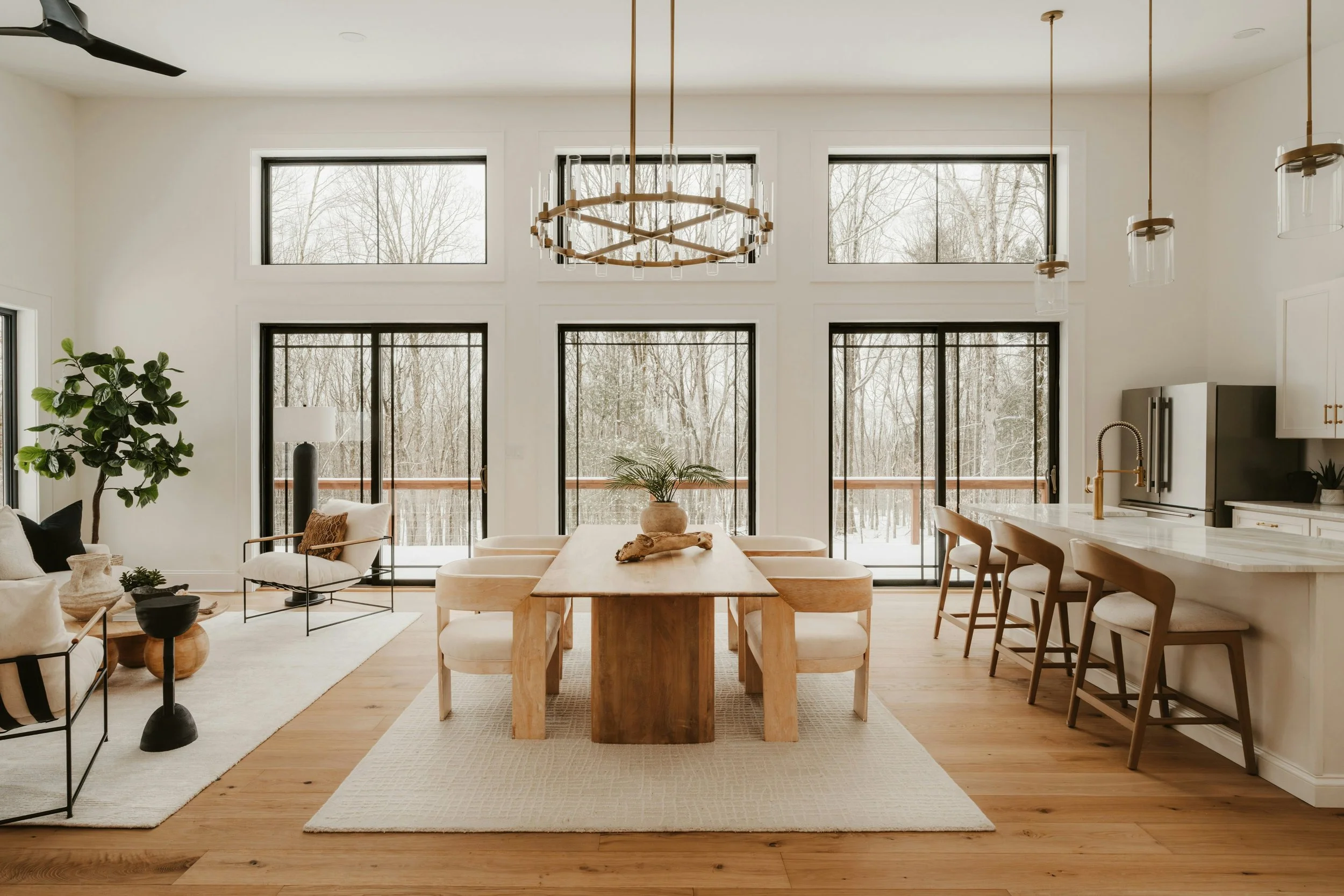
October was a whirlwind month for us. We went through a home renovation that was supposed to be fairly quick, but eventually required us to move out of our home for weeks. Thankfully, we were able to stay with a friend during that time, but we are so happy to be back in our space.
During the process, we had to pack up everything like we were moving, leave, and unpack everything and get it back to being organized. That might sound easy for a professional organizer – but I will admit that it was still quite the project to tackle!
Somewhere in the middle of all that boxing and labeling, I accidentally fell into a decluttering approach that has been so successful that I’ll definitely be using it with my clients: house hushing and backwards decluttering.
Where I Found the Idea of House Hushing
As the renovation was getting underway, I started hearing about Myquillyn Smith's (“The Nester”) ideas about cozy minimalism. She introduces a concept called house hushing, and as I learned more about it, I realized I was already putting it into practice without having a name for it.
Smith also popularized the idea of cozy minimalism – prioritizing the warmth, comfort, and layered textures of a cozy home with fewer items – which I love. I’m not a minimalist, and neither is she, and I find that so refreshing. Her philosophy is about what she calls soulful simplicity: having just the things you need and love around you, and nothing more.
What Is House Hushing?
The idea behind house hushing is that everything in your home is making noise of some sort. Not literal noise, of course, but the mental chatter that comes from the things you see every day.
When you look around, some things calm you or make life easier. Others are less helpful. Some things silently judge you, like the jeans from when you were ten pounds lighter. Some things cause guilt, like the tennis racket in the closet that whispers, "Why don't you play anymore?" Some things simply add visual static, a little hum in the background that you've stopped noticing but still feel.
Smith's method is simple (though not always easy). You box up everything in a space and move it to a holding area for 24-48 hours. Then you bring back only what you truly need. Because the room is now quiet, you can also notice what you actually crave in the space, and you bring that in too.
Whatever is left over becomes your maybe box. From there, you can decide whether those items belong somewhere else in the house, or whether they can go.
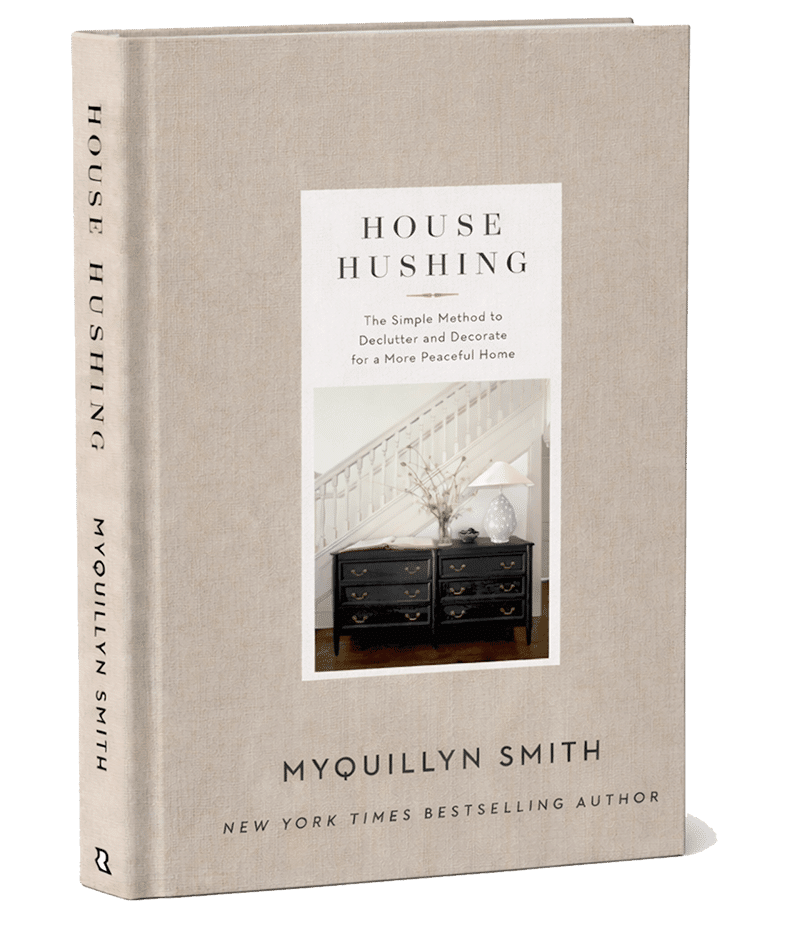
You can read more about house hushing in Myquillyn Smith’s book, House Hushing: The Simple Method to Declutter and Decorate for a More Peaceful Home.
Backwards Decluttering: Starting With Empty
Traditional decluttering asks you to look at a full space and decide what to get rid of. Also an idea of Myquillyn Smith’s, backwards decluttering flips that. You start with nothing and decide what earns its way back in.
A renovation forces this on you. When every room is boxed up, your house is a blank slate, and you get to be much more intentional about what returns.
How I Used Backwards Decluttered During a Home Renovation
I have a confession: my home is not perfectly organized, even though organizing is my job. I'm also not a minimalist, and I don't think I could ever be a true one. I like things. I love decorating and designing. I love being surrounded by cozy, meaningful objects.
But after ten years in our house, I discovered that I had collected far too much. I knew some of it had to go.
As I packed up for the contractors, I let go of the obvious items first. Now that the renovation is done, I'm taking my time pulling things back into the house. Nothing returns on autopilot. For each item, I ask myself three questions:
1. Would I buy this again right now?
2. Is this serving me in this season of life?
3. Do I love it?
The things that pass all three questions are welcome back in our newly renovated space. The things I'm confident I can part with are donated, recycled, or trashed.
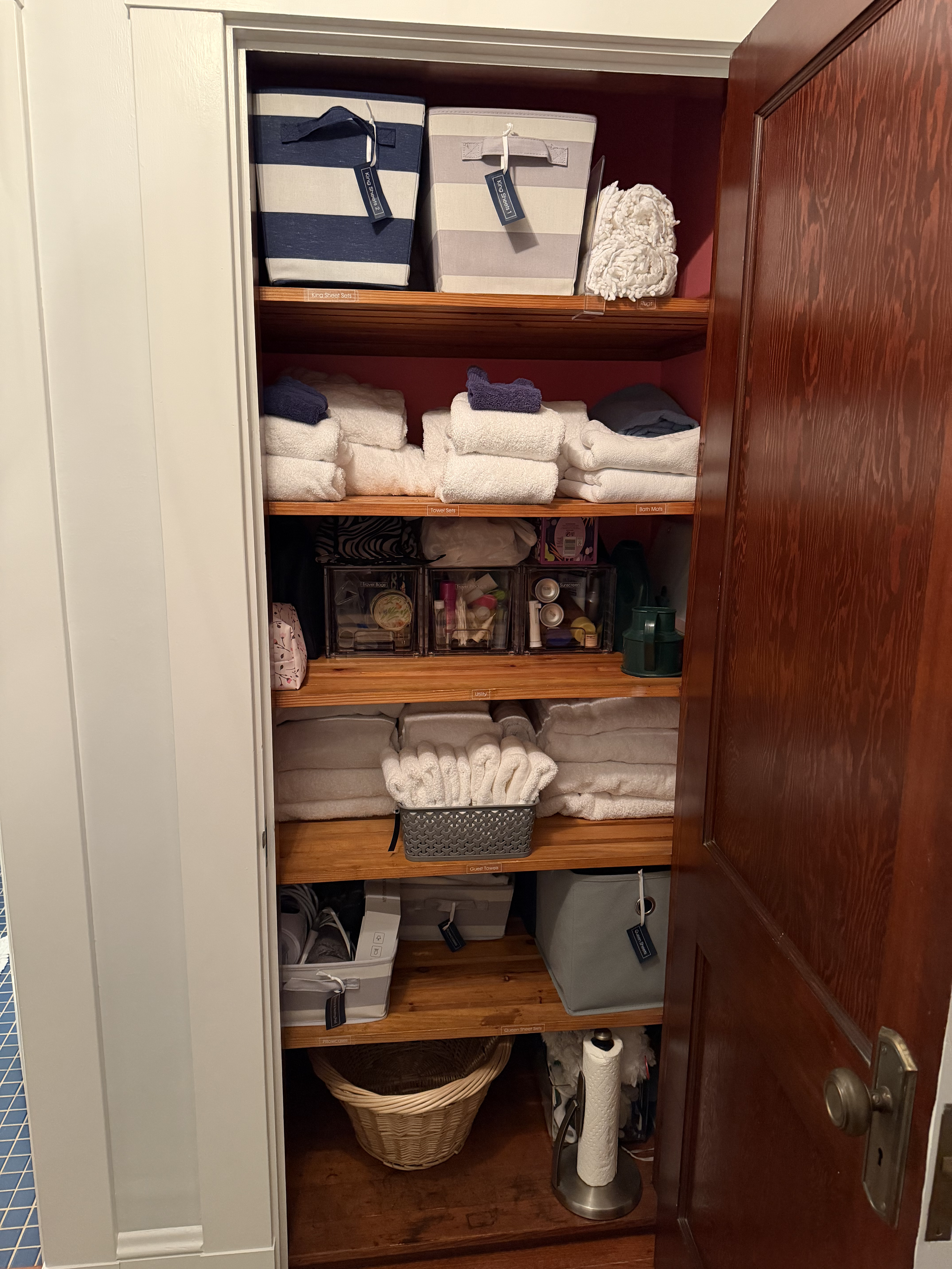
My linen closet after backwards decluttering.
How to Use The Maybe Box
Then there's the third category: the things I'm just not sure about. For those, I allow myself a maybe box.
Here's how it works. I box up the maybes and set them aside. If I think of an item again or go looking for it, it earns its place and comes back. If I never think of it, it gets donated after a few months.
This helps me let go of more than I otherwise would, and there's a reason it works. Researchers have long studied something called the endowment effect, which shows that we tend to value things more once we own them. The maybe box is a gentle way to break that. Out of sight, the item can stop feeling essential, and I essentially trick myself into forgetting I even own it.
I know this concept works for many of my clients, too, especially those who feel anxious about getting rid of things. It's a safety net: you give yourself time, and if you never go back looking for the item, you realize you didn't need it. That breaks the hold it had on you.
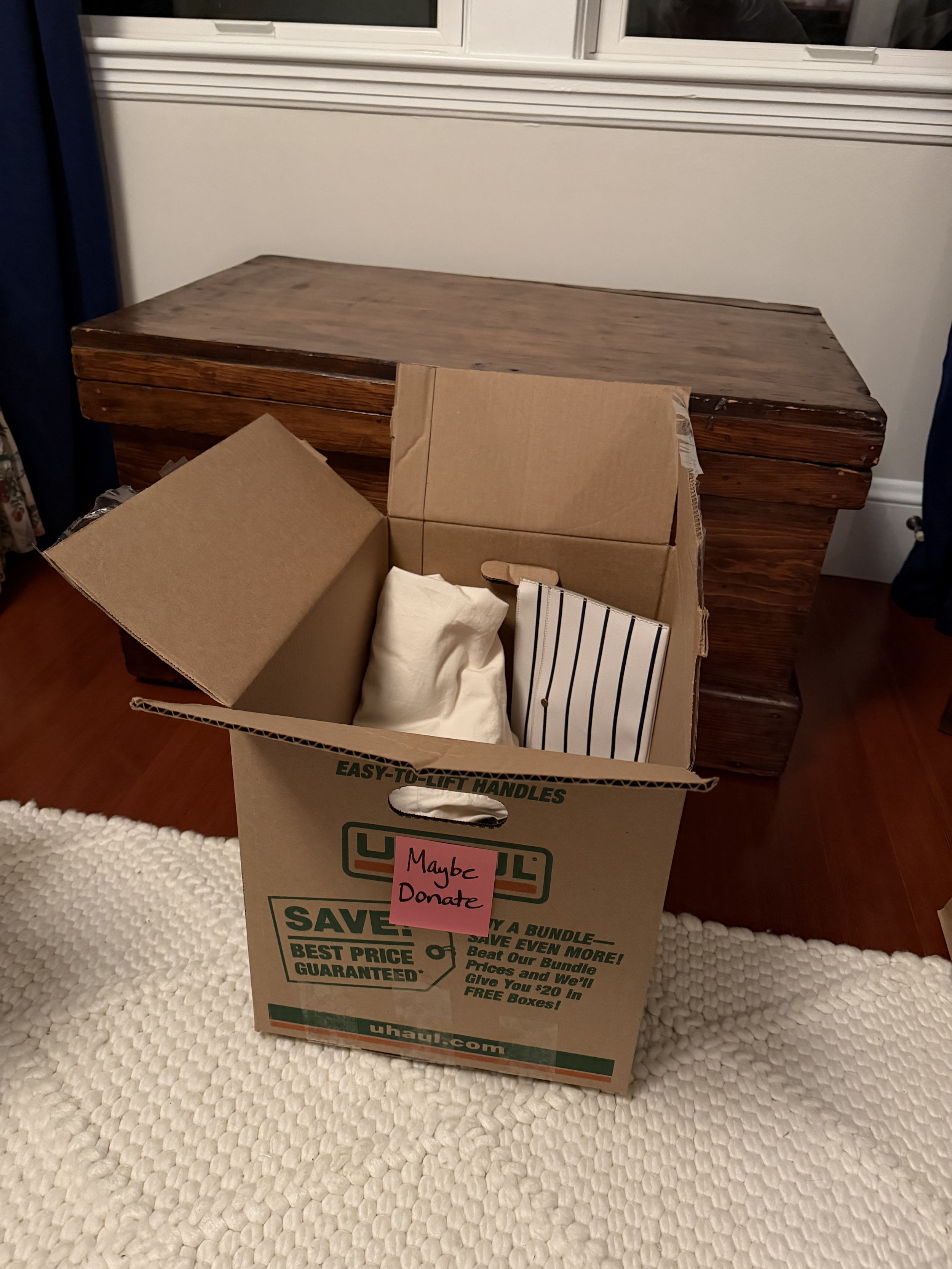
My Maybe Box for donations during our renovation.
How House Hushing and Backwards Decluttering Has Transformed My Mental Clarity
On the surface, our house didn't look cluttered before the renovation. But I'm a squirrel at heart. I tuck things away in the basement, the attic, and the cupboards, and then I forget I own them.
Being forced to pull everything out meant I had to evaluate what we actually use, need, and want. Most of the clutter was behind closed doors, tucked out of sight.
Some of the biggest wins have been in everyday spaces:
My closet: I've only put a very small amount of clothing back in, and it is lovely to not sift through things I don't absolutely love to wear. I also keep a donation basket in my closet so that when I try something on in the morning and it isn't right, it goes straight into the basket.
The pantry: It's easier to see what we have and what we need.
Kitchen drawers and cabinets: I can finally find the right cooking utensil without digging through duplicates.
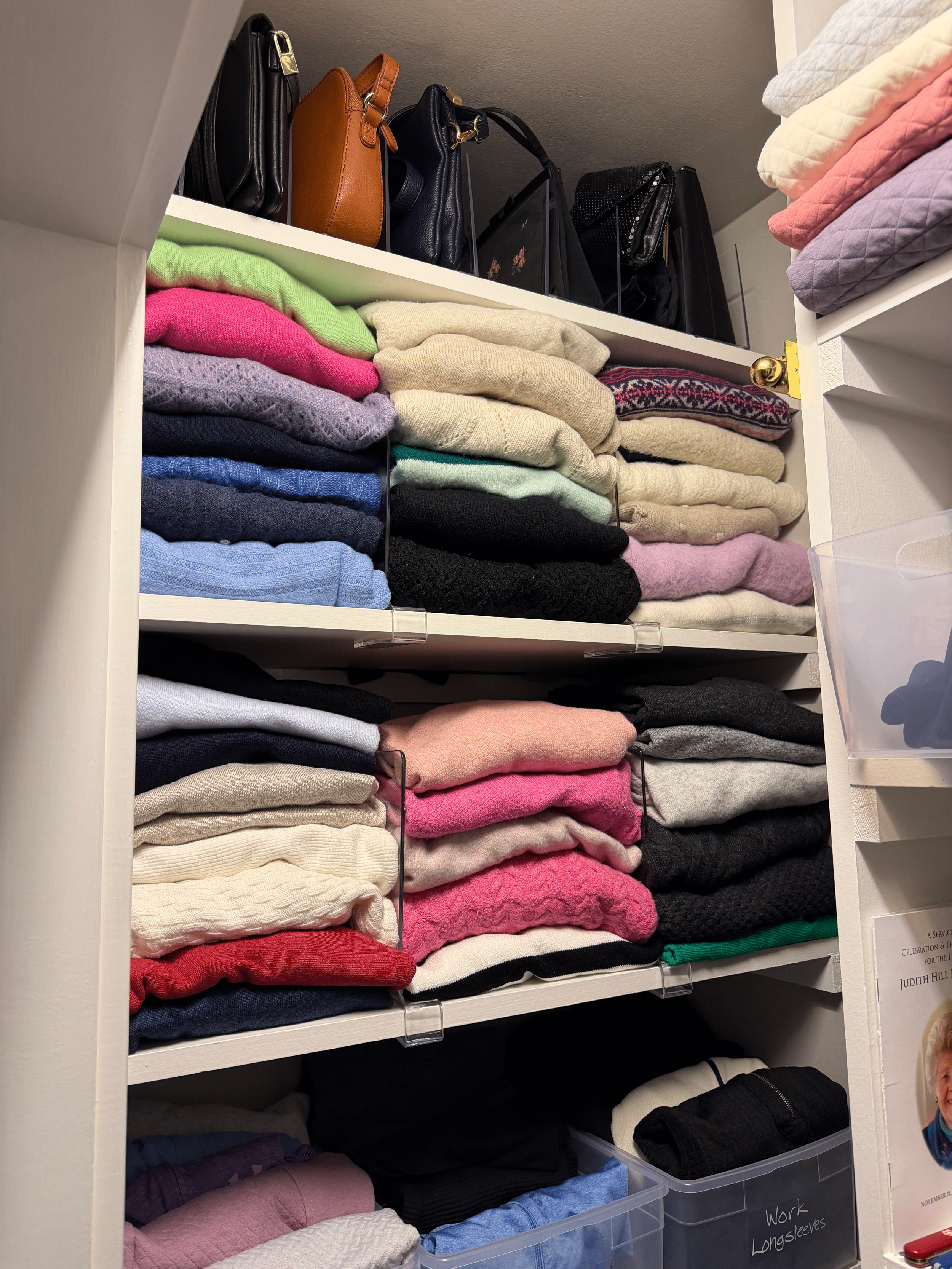
My closet after backwards decluttering.
How I'll Use House Hushing With My Clients
I'm excited to start bringing this approach to my clients, but on a small scale. You don't need a full renovation to try it. Start with just one drawer or one closet at a time. Box it up, give it a little quiet, and bring back only what you need and love. Anything unsure goes in the maybe box.
Try It Yourself
You don't have to become a minimalist to benefit from house hushing. You just have to get a little curious about which of your belongings are quietly making noise. Pick one drawer this week, empty it out, and see what you truly miss.
If you'd like help hushing your home in a way that keeps it cozy and personal, I'd love to work with you. Reach out to schedule a free consultation, and let's find the things worth keeping.
Home Organizational Tips Delivered to Your Inbox

Loved these tips? You'll love my newsletter. Sign up here for more simple systems to make everyday life with your family calmer and more manageable.