
How a “ClutterBug” Can Gently Change the Way You Organize
Organizing doesn’t always fail because of effort—sometimes it’s simply a mismatch. This gentle guide explores how understanding your ClutterBug tendencies can help you create systems that feel easier to maintain and more natural to live with.
There’s a quiet kind of frustration that can come with trying to stay organized.
Not the dramatic kind.
Just the steady noticing that no matter how many times you reset a space… it slowly returns to the same state.
You try a new system.
It works—for a little while.
And then, without much explanation, it stops.
Over time, it can begin to feel like a personal failure.
Like maybe you’re just not someone who can “keep things together.”
But what if that’s not true?
What if the problem isn’t effort…
but fit?
A Softer Way to Understand Organization
I often see people trying to maintain systems that look beautiful—but don’t match how they naturally move through their day.
And that mismatch creates friction.
This is where the idea of organizing styles can feel like a relief.
One of my favorite organizing experts, Cassandra Aarssen, describes four different tendencies (ClutterBugs)—ways people naturally prefer to see, sort, and access their things.
Not as labels.
Just as patterns.
And once you start to notice those patterns, things begin to make more sense.
If you’re curious, you can explore your own tendency here:
https://clutterbug.me/what-clutterbug-are-you-test
Why This Matters in Everyday Life
When a system doesn’t align with you, it asks for more energy than it gives back.
Small tasks feel heavier.
Putting things away feels like a decision instead of a habit.
But when something does align, the opposite happens.
You don’t have to think as much.
You don’t have to try as hard.
Things just… settle more easily.
And that shift, while subtle, can change how your whole home feels.
The Four Organizing Tendencies (With Real-Life Ease in Mind)
1. The Butterfly — You Need to See Things to Use Them
Principle: Visibility creates follow-through.
Many people find that when things are tucked away too well, they simply stop existing in their awareness.
What this might look like:
Forgetting what’s inside drawers or bins
Letting piles form because they’re visible reminders
Feeling more productive when things are in sight
Try this instead:
Open bins or baskets
Clear containers
Hooks or trays for everyday items
Example:
A small open basket on your counter may work better than a perfectly organized drawer you rarely open.
2. The Bee — You Prefer Systems That Feel Simple to Maintain
Principle: Ease matters more than precision.
Some people enjoy being organized—but not at the cost of complexity.
What this might look like:
Avoiding systems with too many steps
Letting things pile up when categories feel unclear
Resetting spaces quickly when systems are simple
Try this instead:
Broad, flexible categories
Minimal labels
Fewer containers, not more
Example:
One bin labeled “papers” may feel more usable than five separate folders.
3. The Ladybug — You Feel Calmer When Things Are Tucked Away
Principle: Visual calm supports mental calm.
For some, a space feels more restful when surfaces are clear—even if the system behind the scenes is simple.
What this might look like:
Wanting counters and surfaces to stay clear
Feeling overwhelmed by visible clutter
Preferring quick cleanup over detailed sorting
Try this instead:
Closed baskets or cabinets
Easy drop zones
Light structure inside containers
Example:
A basket by the door where everything lands can feel more supportive than trying to sort items immediately.
4. The Cricket — You Like Everything to Have a Clear Place
Principle: Structure creates ease.
Some people feel most at home when things are clearly categorized and consistently maintained.
What this might look like:
Naturally sorting and grouping items
Noticing when something is out of place
Enjoying detailed systems
Try this instead:
Drawer dividers
Clearly labeled sections
Defined zones within spaces
Example:
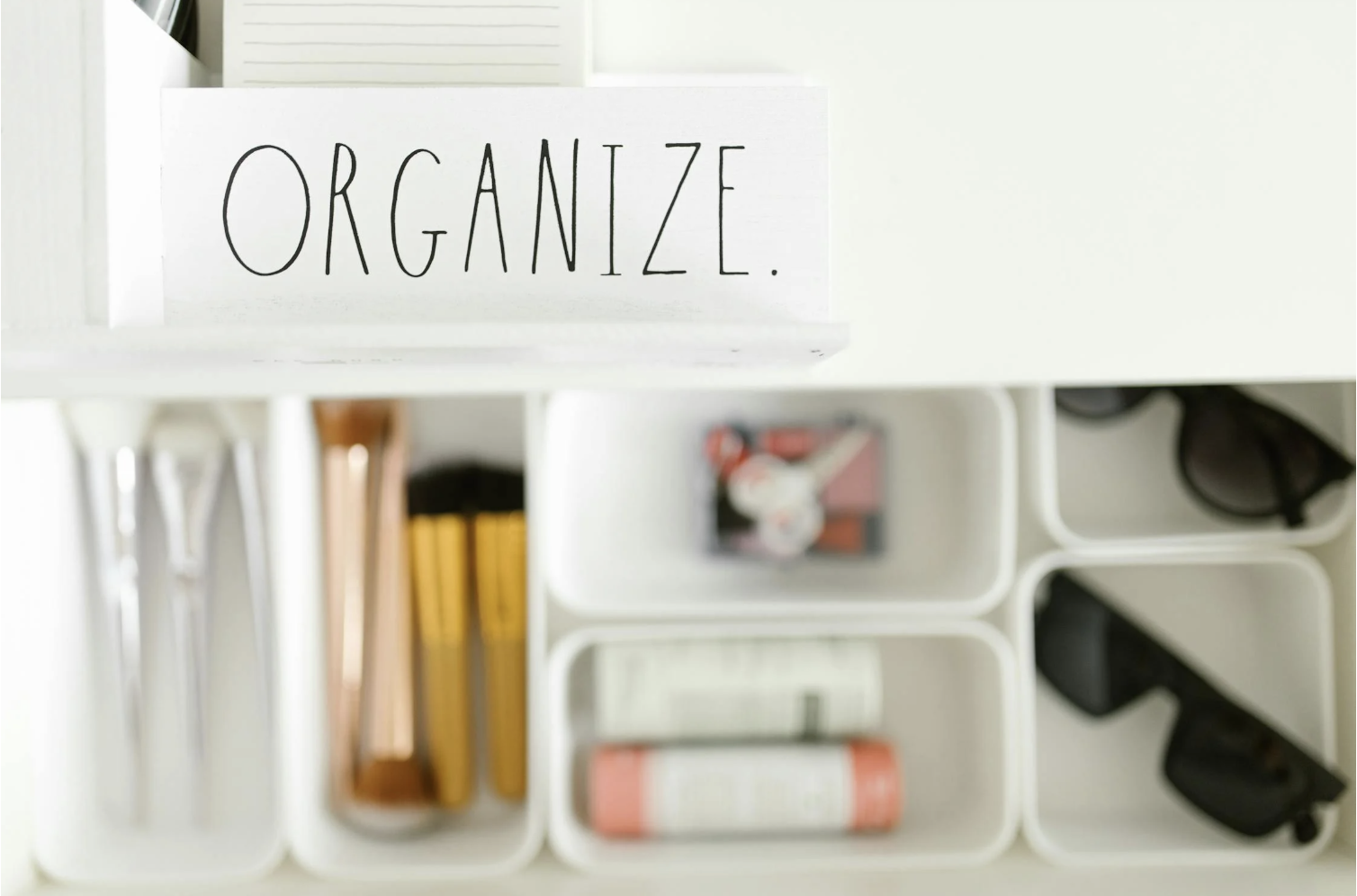
A drawer where each item has its own section can make daily routines feel smoother.
You Might Be More Than One—and That’s Helpful
Very few people fit into just one pattern.
You might need visibility in one space…
and calm, hidden storage in another.
Rather than choosing a category, it can help to ask:
“What would make this space easier to return to?”
That question tends to lead you in the right direction.
How to Begin Without Overhauling Everything
You don’t need to start from scratch.
Choose one small area—something that feels mildly frustrating, not overwhelming.
Then gently notice:
What feels difficult right now
What might be asking for more ease
What small shift would support you better
That’s enough.
You’re not building a perfect system.
You’re adjusting your space to meet you where you are.
A Gentle Reminder
There’s nothing wrong with the way you’ve been trying.
Most people were simply never shown that there are different ways to organize—and that those differences matter.
You don’t need more discipline.
You need a system that understands you.
Final Thoughts
A home doesn’t become easier to manage because it looks better.
It becomes easier when it quietly supports the way you already live.
And sometimes, that shift begins with seeing yourself a little more clearly inside your space.